

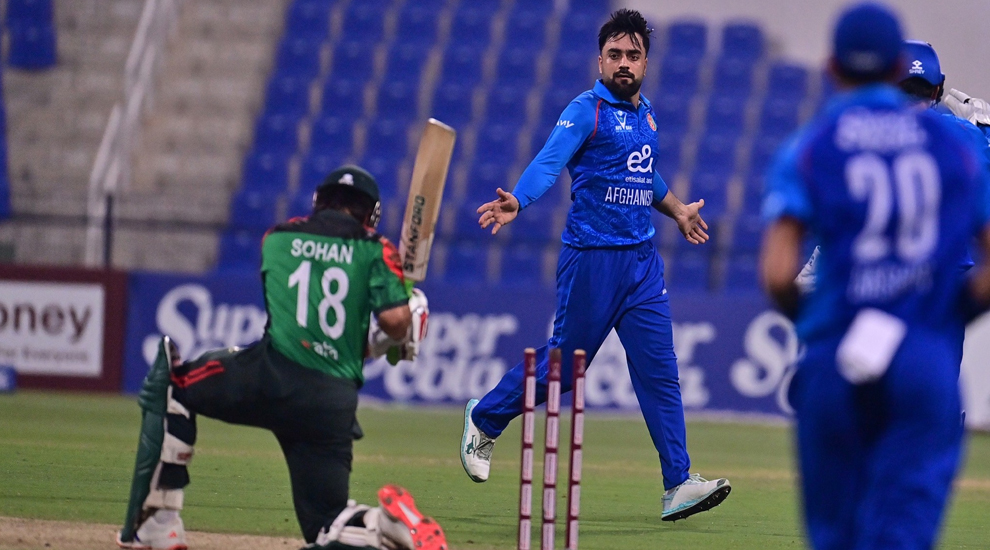
Following crushing defeats against both Zimbabwe and Afghanistan, Bangladesh has been knocked out of the Tri-Nation ODI Series prior to the final. The team’s abysmal campaign was plagued by a sudden leadership shift, flawed batting tactics, lack of partnerships, and the inability to bat through their allotted 50 overs. Stand-in captain Tawhid Hridoy openly admitted after the tournament that the squad's execution fell far short of their words.
Below are the six defining reasons behind Bangladesh's dismal performance in the series:
1. Losing the Captain on the Eve of the Series
Litton Das was scheduled to launch his journey as Bangladesh's full-time ODI captain with this tri-series. However, a groin joint injury on the eve of the tournament ruled him out, dealing a massive blow to the team dynamic before a ball was even bowled. Litton was not just the skipper but also the anchor of the middle order. In his absence, the leadership mantle unexpectedly fell upon Tawhid Hridoy, who lacked prior ODI captaincy experience. Consequently, Bangladesh had to scramble to adjust both its tactical planning and batting order.
2. Imbalance in the Batting Combination
The stark lack of recognized batsmen was highlighted when left-arm pacer Shoriful Islam was forced to walk out to bat at number eight against Afghanistan. Excluding Hridoy, all of Bangladesh’s top six batsmen were either specialist openers or had extensive experience opening the innings. This led to an over-saturation of similar top-order players while leaving the middle order devoid of the balance required to absorb pressure. With fewer recognized batters down the order, the team failed to bridge the gap with substantial individual knocks or partnerships.
3. Top-Order Collapse and Early Wickets
Against Afghanistan, Bangladesh found themselves reeling at 27 for 3 early in the innings. Recovering control after such an early collapse proved nearly impossible. Although Saif Hassan and Parvez Hossain Emon mounted a temporary recovery with a 93-run partnership, the innings fell apart once the stand was broken. From 121 for 5, Bangladesh was bundled out for a paltry 160. Emon scored 70 and Saif contributed 41, but the rest of the lineup offered virtually no support. Hridoy cited the top-order's inability to buy runs as a primary cause for the batting collapse.
4. Failure to Build Long Partnerships
Aside from isolated stands, Bangladesh lacked consistency throughout their innings. The 93-run partnership between Saif and Emon against Afghanistan was the sole bright spot across both matches. Against Zimbabwe, the opening pair managed 47 runs, but no subsequent partnership could construct a formidable total. The highest stand against Zimbabwe was an 8th-wicket effort of 32 runs between Taskin Ahmed and Rishad Hossain. In a 50-over format where sustained partnerships are essential to post competitive totals, Bangladesh collapsed repeatedly due to a lack of responsible batting.
5. Inability to Bat Through the 50 Overs
Utilizing the full quota of 50 overs is fundamental in ODI cricket, yet Bangladesh failed to achieve this in both fixtures. Chasing 272 against Zimbabwe, Bangladesh were skittled out in just 33.4 overs. The scenario was even more critical against Afghanistan; to qualify for the final, Bangladesh needed not only a win but a victory margin of at least 41 runs. Instead, the team was bowled out for 160 with 52 balls left unused. The batsmen struggled to strike a balance between accelerating the run rate and protecting their wickets.
6. Inability to Handle Pressure
Bangladesh’s recent head-to-head record against both opposition teams has grown increasingly troubling. The Tigers have now lost four consecutive ODIs against Afghanistan, winning only once in their last seven encounters in the UAE. Similarly, against Zimbabwe, Bangladesh has managed just two wins in their last seven meetings. Defending a low target of 160 against Afghanistan, the bowling attack failed to exert pressure. Unbeaten 67 from Rahmat Shah, 36 from Hasmatullah Shahidi, and 34 from Ibrahim Zadran saw Afghanistan coast to the target in 35.3 overs. Taskin Ahmed picked up two wickets while Mustafizur Rahman took one.
A Major Reality Check Ahead of the World Cup
With the 2027 ODI World Cup on the horizon, this series has exposed severe vulnerabilities in a format where Bangladesh once commanded authority. Captain Tawhid Hridoy acknowledged the shortcomings, emphasizing that despite holding high ambitions for silverware, the team’s performance on foreign soil remains significantly flawed. He stressed that alongside batting fundamentals, fielding standards also require urgent rectification before Bangladesh faces stiffer challenges on the road to the World Cup.
Sylhetview24/RiK/Ashik-02
 আইটি ল্যাব সলিউশন্স লি.